
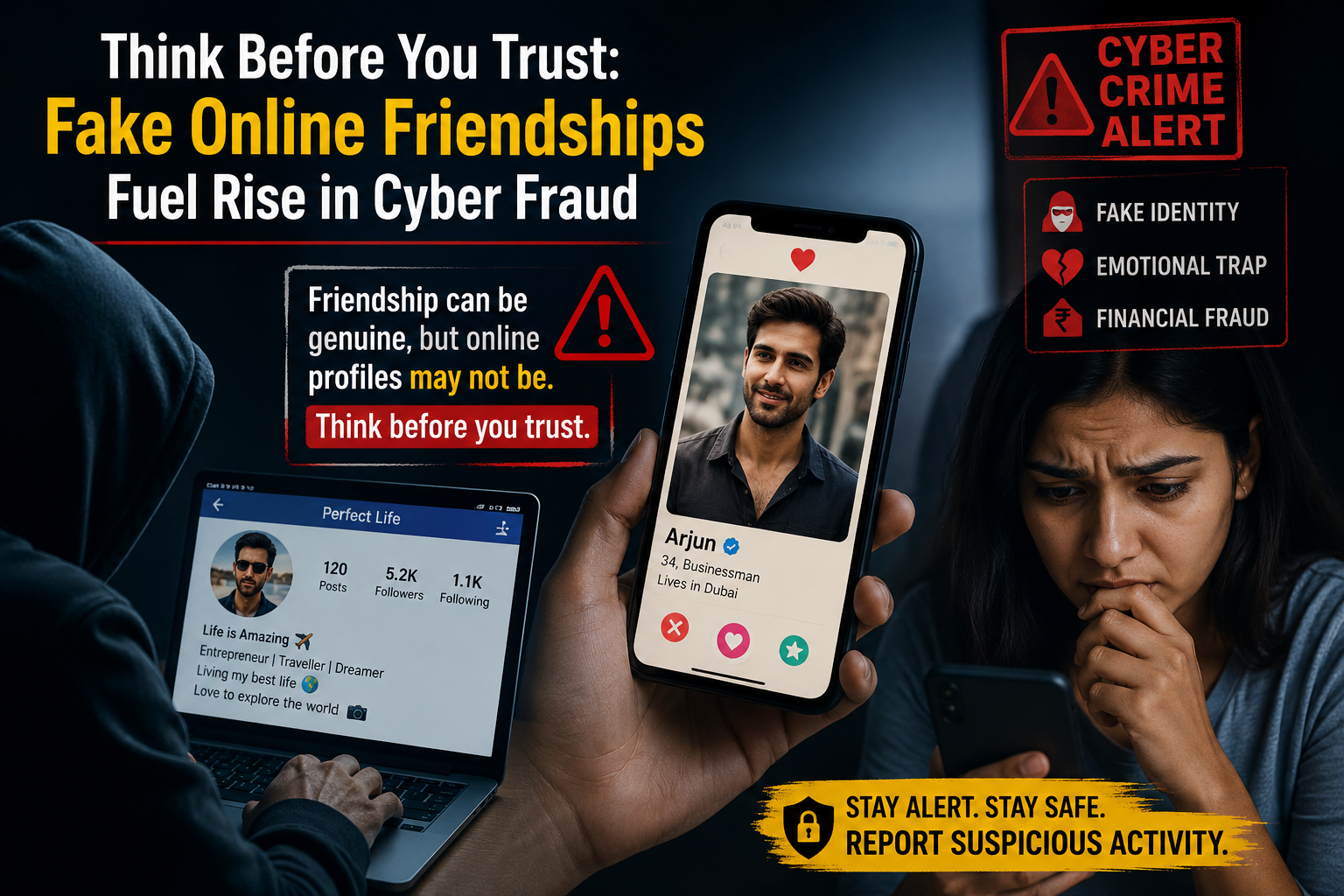
Cybercrime authorities are urging internet users, particularly women, to remain cautious while interacting with strangers on social media and online dating platforms. While many online friendships are genuine, cyber criminals often create fake identities and attractive profiles to build trust before exploiting victims emotionally and financially.
Fraudsters may pose as professionals, military officers, businessmen, or foreign nationals, spending weeks or even months developing a relationship. Once trust is established, they often request money, claim to be sending expensive gifts that require customs fees, or lure victims into fake investment schemes.
Officials advise users to verify the identity of people they meet online, avoid sharing personal or financial information, never send money to someone they have not met in person, and immediately report suspicious accounts or fraudulent activities.
The public is encouraged to stay vigilant and remember that an attractive profile or friendly conversation does not always reflect a person’s true identity. The message from cybercrime authorities is clear: “Friendship can be genuine, but online profiles may not be. Think before you trust.”
Sources: Indian Cyber Crime Coordination Centre (I4C), National Cyber Crime Reporting Portal (cybercrime.gov.in), and CyberDost, Ministry of Home Affairs.